

 Ahmed Ragaie
Perched atop the Mokattam Hills overlooking the city skyline, the Cairo Citadel guide covers one of the most imposing medieval fortresses in the Middle East. Known locally as the Citadel of Saladin (Qala'at Salah El-Din), this fortification served as the seat of Egyptian government and military rule for nearly 700 years. Exploring its grand stone gateways, elevated terraces, and historic mosques offers an extraordinary journey through centuries of Islamic history.
Exploring the Cairo Citadel: History, Views, and Architecture
Perched atop the Mokattam Hills overlooking the city skyline, the Cairo Citadel guide covers one of the most imposing medieval fortresses in the Middle East. Known locally as the Citadel of Saladin (Qala'at Salah El-Din), this fortification served as the seat of Egyptian government and military rule for nearly 700 years. Exploring its grand stone gateways, elevated terraces, and historic mosques offers an extraordinary journey through centuries of Islamic history.
The Rich History of the Citadel
Constructed in 1176 AD by the Ayyubid ruler Saladin (Salah al-Din al-Ayyubi), the fortress was built to protect Cairo from Crusader invasions. Saladin utilized stone blocks taken from smaller pyramids at Giza to construct its formidable outer walls and towers.
Over the centuries, successive rulers expanded the complex:
-
The Mamluk Period: Sultan An-Nasir Muhammad expanded the Citadel in the 14th century, building grand palaces, a royal mosque, and aqueducts to supply water from the Nile.
-
The Ottoman Era: Muhammad Ali Pasha seized control of Egypt in the early 19th century, demolishing older Mamluk palaces within the Citadel walls to construct his grand Ottoman-style monuments.
Architectural Highlights inside the Complex
A complete tour using this Cairo Citadel guide includes visiting several distinct architectural monuments contained within the fortress walls:
|
Monument |
Construction Era |
Key Architectural Features |
|
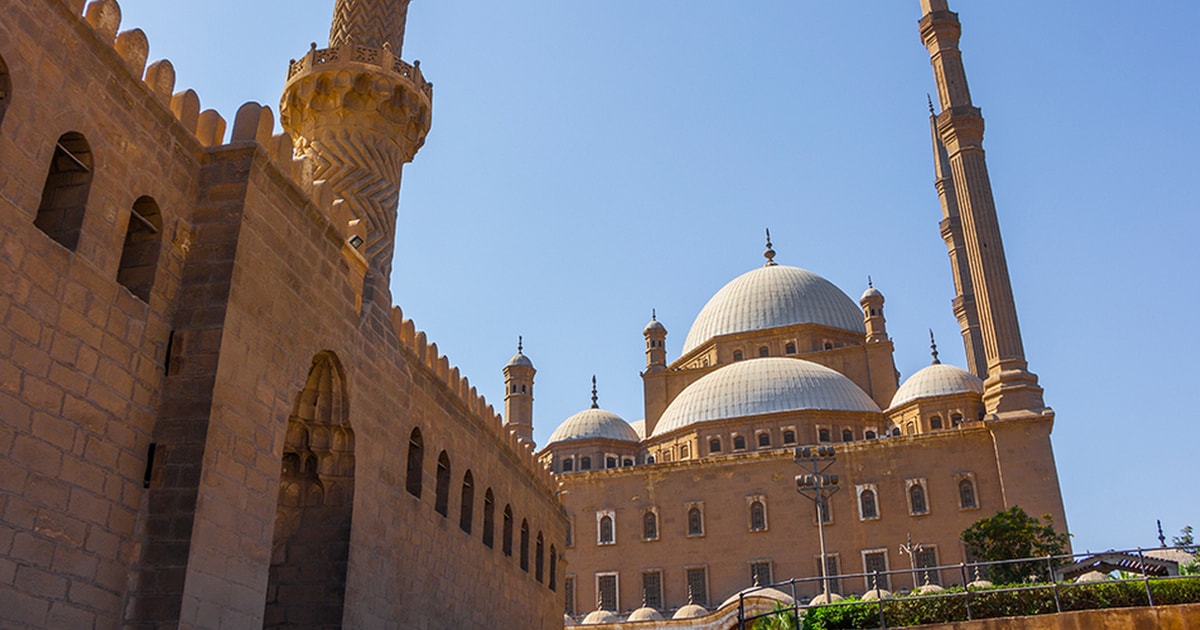
Mosque of Muhammad Ali |
1830 – 1848 AD |
Ottoman style, central dome, twin minarets, alabaster-clad walls |
|
Mosque of Sultan al-Nasir Muhammad |
1318 AD |
Green-tiled minarets, marble columns, hypostyle Mamluk hall |
|
Mosque of Sulayman Pasha al-Khadim |
1528 AD |
First Ottoman-style mosque built in Egypt, colorful tilework |
|
Gawhara Palace (Jewel Palace) |
1814 AD |
Ottoman-European fusion, heavy gold leaf trim, royal receptions |
|
National Military Museum |
1937 AD |
Displays Egyptian military history from Pharaonic times to modern era |
Panoramic Views over Cairo
Beyond its architecture, the Citadel is famous for offering the best elevated view of Greater Cairo.
-
The Main Observation Terrace: Located directly in front of the Mosque of Muhammad Ali, this wide stone terrace provides sweeping views of Islamic Cairo's minarets, Downtown Cairo, and the Nile River.
-
Spotting the Pyramids: On clear days, visitors can look across the horizon to spot the distant silhouettes of the Pyramids of Giza rising above the desert haze on the western edge of the city.
Visitor Logistics and Tips
-
Opening Hours: The Citadel complex is open daily from 8:00 AM to 4:30 PM (hours may be shortened during the holy month of Ramadan).
-
Dress Code: Because the complex includes active religious sites like the Alabaster Mosque, visitors should dress modestly by covering shoulders and knees. Shoes must be removed (or covered with provided foot booties) before stepping onto mosque carpets.
-
Ticketing: Entrance tickets must be paid using a debit or credit card at the main entrance gate complex.
Frequently Asked Questions (FAQ)
How much time should I allocate for a Cairo Citadel guide itinerary?
Plan to spend 2 to 3 hours exploring the Citadel. This allows sufficient time to tour the Mosque of Muhammad Ali, walk through the Military Museum, visit the Mosque of al-Nasir Muhammad, and take photos from the observation terrace.
Is the Cairo Citadel accessible by Uber?
Yes, using an app like Uber is the easiest way to reach the Citadel. Have the driver drop you off directly at the main visitor entrance and ticket office gate along Salah Salem Street.