
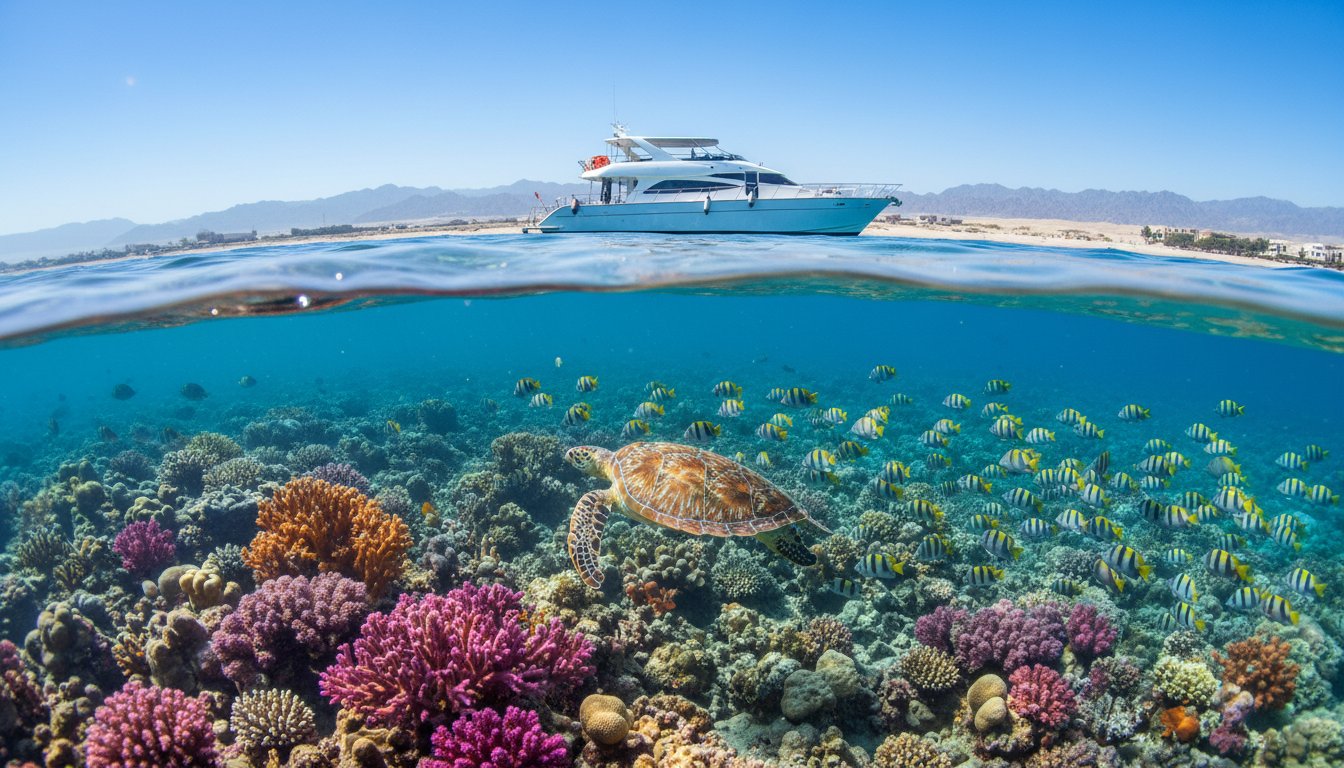
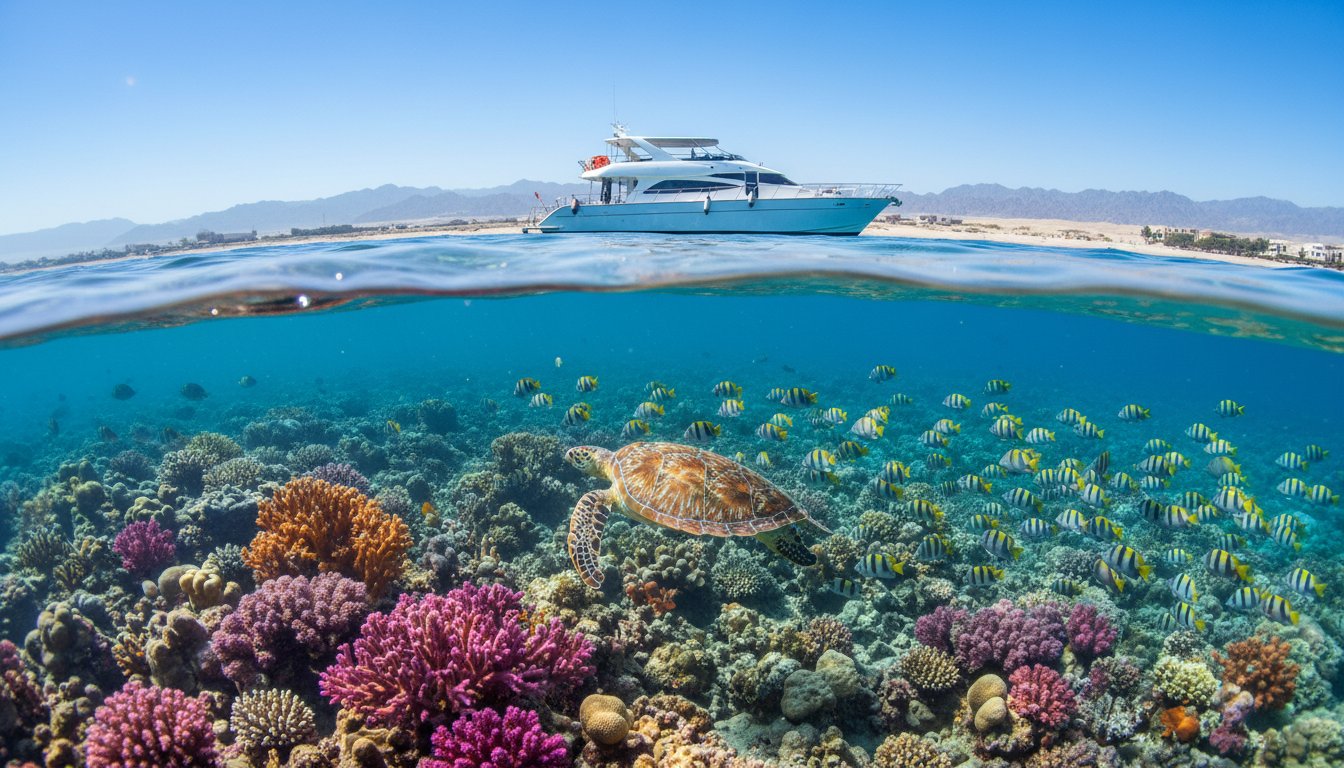
The Egyptian Red Sea is internationally recognized as one of the world's premier scuba diving destinations. Renowned for its exceptional water visibility (often exceeding 30 meters), vibrant soft coral gardens, historic shipwrecks, and encounters with large pelagic marine life, Egypt offers dive experiences for every qualification level.
Whether you are seeking shallow coral gardens from a coastal resort or embarking on a liveaboard to remote offshore reefs, exploring the best dive sites in the Red Sea delivers an unforgettable underwater journey.
Top Dive Sites Across the Red Sea
1. SS Thistlegorm (Strait of Gubal)
Widely considered one of the finest wreck dives in the world, the SS Thistlegorm was a British armed Merchant Navy ship sunk by German bombers in 1941.
-
The Highlight: Resting upright at a depth of 16 to 32 meters, the hold remains packed with World War II cargo, including Bedford trucks, BSA motorcycles, armored cars, locomotives, and ammunition.
-
Diver Level: Advanced Open Water (currents can be strong and interior penetration requires good buoyancy control).
2. Ras Mohammed National Park (Sharm El Sheikh)
Located at the southern tip of the Sinai Peninsula where the Gulf of Suez meets the Gulf of Aqaba, Ras Mohammed is Egypt's flagship marine sanctuary.
-
Shark & Yolanda Reefs: The park's most famous twin dive features dramatic wall drop-offs falling past 750 meters. Divers drift past dense clouds of anthias, sea turtles, giant barracudas, and the scattered cargo (including porcelain toilets) of the wrecked freighter Yolanda.
-
Diver Level: Intermediate to Advanced.
3. Elphinstone Reef (Marsa Alam)
A steep, narrow offshore reef running north to south, Elphinstone is famous among experienced divers looking for pelagic encounters.
-
The Highlight: The reef is world-renowned for encounters with Oceanic Whitetip sharks (Carcharhinus longimanus), particularly between October and December. Hammerheads, threshers, and rays are also frequently spotted along the deep plateau walls.
-
Diver Level: Advanced Open Water (strong, unpredictable open-ocean currents).
4. The Blue Hole & The Canyon (Dahab)
Dahab offers a relaxed, shore-accessible diving atmosphere vastly different from boat-based hubs.
-
The Blue Hole: A famous 100-meter-deep submarine sinkhole opening directly off the shore. While technical divers explore "The Arch" (a deep tunnel connecting to the open sea at 56 meters), recreational divers enjoy drifting along the outer coral wall (The Saddle) into the sinkhole.
-
The Canyon: A narrow volcanic fissure opening at 15 meters and dropping to 30+ meters, allowing light beams to illuminate swimming divers.
-
Diver Level: Advanced Open Water / Technical.
5. Abu Nuhas Wrecks (Hurghada / El Gouna)
Known as the "Ship Graveyard," this triangular reef in the Strait of Gubal has claimed numerous vessels over centuries.
-
The Highlight: It houses four accessible shipwrecks on a single site, including the Giannis D (a Greek freighter resting at a 45-degree angle), the 19th-century mail ship Carnatic, the Chrisoula K, and the Kimon M.
-
Diver Level: Intermediate to Advanced.
6. Abu Dabab (Marsa Alam)
A sheltered, sandy bay that provides a gentle, shallow dive experience.
-
The Highlight: Abu Dabab is famous for its lush seagrass beds, serving as a sanctuary for resident giant green sea turtles and the rare, gentle Dugong ("sea cow").
-
Diver Level: Beginner / Open Water / Snorkelers.
Choosing Your Base: Day Boats vs. Liveaboards
How you experience the Red Sea depends heavily on your dive base:
-
Day-Boat Diving (Sharm, Hurghada, Dahab, Marsa Alam): You board a boat in the morning, complete two or three dives at nearshore reefs, and return to your land resort by late afternoon. Ideal for families, beginners, and travelers balancing diving with sightseeing.
-
Liveaboard Safari (5 to 7 Nights): You sleep and eat onboard a specialized dive vessel traveling to remote offshore marine parks—such as the Brothers Islands, Daedalus Reef, Fury Shoals, and St. John's. Liveaboards offer 3 to 4 dives daily and provide access to untouched pelagic ecosystems.
Best Time of Year for Red Sea Diving
Diving in Egypt is possible year-round, but specific seasons favor different highlights:
-
March to May (Spring): Excellent visibility, mild air temperatures, and pleasant water temperatures (24°C–26°C).
-
June to August (Summer): Warmest water temperatures (28°C–30°C). Best window for spotting schooling Hammerhead sharks at Daedalus Reef.
-
September to November (Autumn): Widely considered the peak overall diving season. Warm waters paired with prime conditions for Oceanic Whitetip encounters.
-
December to February (Winter): Cooler water temperatures (21°C–23°C requiring a 5mm wetsuit), but high visibility and chances to spot threshers and whale sharks.
Exploring the best dive sites in the Red Sea reveals an underwater world packed with historic wrecks, dramatic walls, and marine biodiversity. From shore dives in Dahab to pelagic drift dives off Marsa Alam, Egypt delivers one of the ultimate ocean adventures on the planet.