

 Ahmed Ragaie
Cairo is often associated with the pyramids, Islamic architecture, and ancient Egyptian history. But beneath the modern city lies another remarkable chapter of Egypt's past: the story of Christianity in Egypt.
Exploring Coptic Cairo: The Hanging Church and Christian History
Cairo is often associated with the pyramids, Islamic architecture, and ancient Egyptian history. But beneath the modern city lies another remarkable chapter of Egypt's past: the story of Christianity in Egypt.
Coptic Cairo, located in the historic Old Cairo district, is home to some of the country's most important Christian monuments. Churches, monasteries, museums, and the remains of the ancient Roman fortress of Babylon are concentrated within a relatively small area.
For American travelers interested in history, religion, architecture, or cultural heritage, exploring Coptic Cairo provides an opportunity to experience a different side of Egypt.
This Coptic Cairo guide covers the Hanging Church, the Coptic Museum, Babylon Fortress, other important churches, and practical tips for visiting the area.
What Is Coptic Cairo?
Coptic Cairo is a historic area of Old Cairo associated with Egypt's Coptic Christian heritage.
The district developed around the ancient Roman fortress of Babylon and contains a remarkable collection of Christian monuments.
The Cairo Governorate describes the area as the Religious Complex and identifies the Babylon Fortress, Hanging Church, Coptic Museum, and several churches among its main attractions.
Walking through the area can feel very different from exploring other parts of Cairo. Ancient stone structures, narrow streets, churches, museums, and religious landmarks are concentrated around the same historic neighborhood.
The Hanging Church
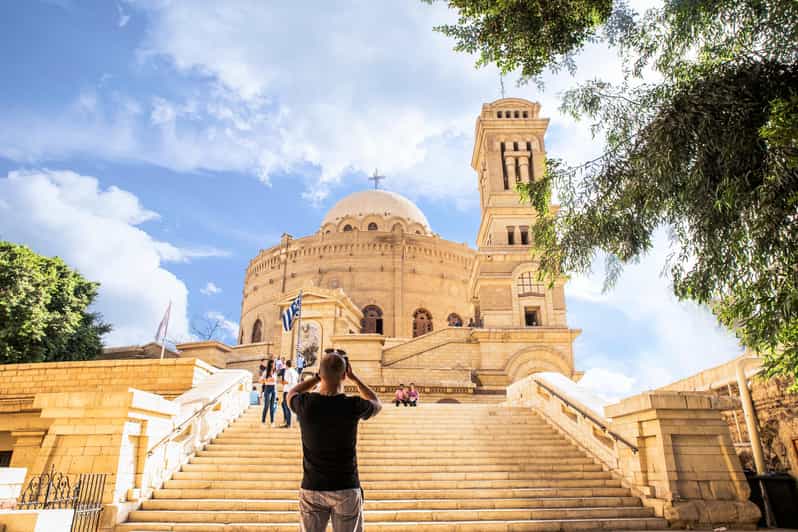
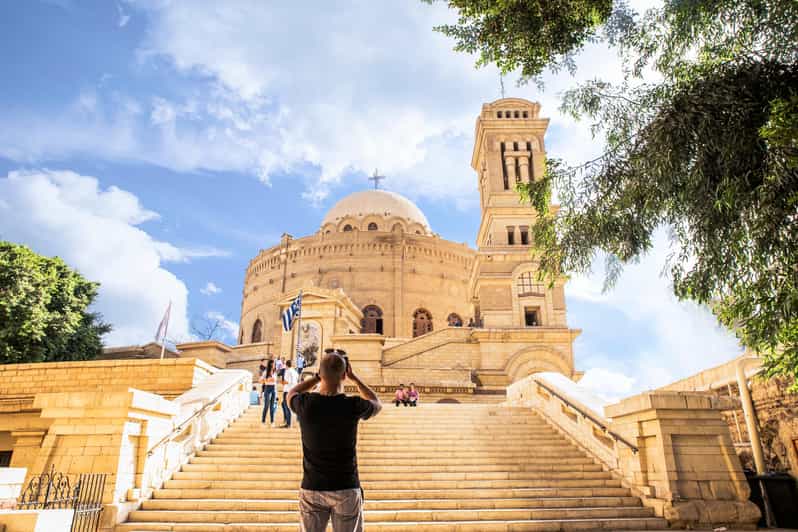
The Hanging Church is the most famous attraction in Coptic Cairo.
Its official name is the Church of the Virgin Mary, while its Arabic name, Al-Muallaqa, means "the suspended" or "hanging."
The church earned its name because it was built above the ruins and towers of the ancient Roman fortress of Babylon. Egypt's Ministry of Tourism and Antiquities describes it as one of the most important historic churches in Old Cairo.
The church is particularly notable for its architecture and collection of religious icons.
Why Is It Called the Hanging Church?
The church was constructed above the southern section of the Roman fortress, giving the impression that it is suspended above the ancient structure.
The relationship between the church and Babylon Fortress is one of the most fascinating aspects of the visit.
Rather than being an isolated monument, the church forms part of a much larger historical landscape.
Inside the Hanging Church
The interior is one of the highlights.
Visitors can see wooden ceilings, marble columns, religious icons, and elaborate architectural details.
The church contains a marble pulpit supported by columns and decorated with mosaics. The Ministry of Tourism and Antiquities notes that some of its icons date back centuries, making the interior especially significant for visitors interested in Coptic art.
The architecture also reflects the long history of restoration and development that the church has experienced.
Babylon Fortress
Before exploring the churches, it is useful to understand the Roman history beneath them.
Babylon Fortress dates to the Roman period and was built in the area now known as Old Cairo.
Today, surviving sections of the fortress form part of the historical environment surrounding the Coptic monuments. The Cairo Governorate identifies the fortress as one of the key attractions within the Religious Complex.
The fortress provides an important connection between Roman Egypt and the later development of Christian Cairo.
The Coptic Museum
The Coptic Museum is another essential stop.
Established in 1910, the museum contains a large collection of Coptic art and artifacts and is located within the historic area of Babylon Fortress.
For travelers who want to understand what they are seeing inside the churches, the museum can provide valuable historical and artistic context.
Its collections help explain how Christianity developed in Egypt and how Egyptian artistic traditions interacted with Christian themes.
Church of St. Sergius and St. Bacchus
Another important stop in Coptic Cairo is the Church of St. Sergius and St. Bacchus, often known as Abu Serga.
The church is traditionally associated with the Holy Family's journey through Egypt.
Its underground crypt is one of the most interesting features and adds another layer to the religious history of the area.
For visitors interested in biblical history and Christian traditions, this church can be particularly meaningful.
The Church of St. George
The Church of St. George is another prominent Christian monument in the area.
The church and surrounding complex demonstrate the variety of Christian architectural and religious traditions preserved within Old Cairo.
Coptic Cairo is particularly interesting because several important religious buildings are located within walking distance of each other.
The Church of St. Barbara
The Church of St. Barbara is another historic church in the Coptic district.
Its religious architecture and connection to the broader Coptic heritage make it worthwhile for travelers who have enough time to explore beyond the Hanging Church.
Rather than visiting one church and leaving, consider treating Coptic Cairo as a complete historical district.
Coptic Cairo and the Holy Family
Coptic Christian tradition places great importance on the journey of the Holy Family through Egypt.
Several locations around Egypt are connected to this tradition, and Old Cairo contains some of the most important Christian sites associated with it.
The official Egyptian tourism platform highlights Historic Cairo as an area containing sites connected with the Holy Family's journey through Egypt.
This adds another dimension to the experience for Christian travelers.
How Long Do You Need in Coptic Cairo?
You can see the main highlights in approximately half a day.
A practical itinerary could include:
-
Babylon Fortress
-
Hanging Church
-
Church of St. Sergius and St. Bacchus
-
Coptic Museum
-
Church of St. George
-
Church of St. Barbara
If you are particularly interested in Christian history and art, you can easily spend longer exploring the museums and churches.
What Should You Wear?
Coptic Cairo contains active religious sites, so modest clothing is appropriate.
Women may want to bring a scarf and choose clothing that covers the shoulders and knees.
Men should also avoid extremely casual or revealing clothing when entering churches.
Comfortable shoes are important because you may spend several hours walking through the historic district.
Can You Take Photos?
Photography policies can vary between churches and museums.
Always look for signs and ask staff before photographing interiors, religious ceremonies, or worshippers.
The U.S. State Department also advises travelers to be aware that photographing certain sensitive government and security locations in Egypt is prohibited.
Is Coptic Cairo Worth Visiting?
Absolutely.
For travelers who have already explored the pyramids and ancient Egyptian temples, Coptic Cairo provides a completely different historical perspective.
You can see Roman remains, early Christian architecture, religious art, and centuries-old traditions within the same neighborhood.
It is also a useful reminder that Egyptian history extends far beyond the pharaohs.
FAQs About Coptic Cairo
What is Coptic Cairo famous for?
Coptic Cairo is famous for its historic Christian churches, the Hanging Church, Coptic Museum, Babylon Fortress, and monuments connected with Egypt's Christian heritage.
Is the Hanging Church worth visiting?
Yes. The Hanging Church is one of the most important historic Christian monuments in Cairo and is especially notable for its architecture, icons, and location above the Roman fortress of Babylon.
How long should I spend in Coptic Cairo?
A half-day is enough for the major highlights, while history and religious heritage enthusiasts may prefer a full day.
Is Coptic Cairo suitable for non-Christian travelers?
Yes. The area is valuable for anyone interested in history, architecture, archaeology, art, and Egyptian culture.
Can Coptic Cairo be combined with other Cairo attractions?
Yes. It can be combined with Historic Cairo, Islamic Cairo, the Citadel, or other central Cairo attractions depending on your itinerary.
Final Thoughts
Exploring Coptic Cairo is an opportunity to discover a side of Egypt that many first-time visitors overlook.
From the Hanging Church and Babylon Fortress to the Coptic Museum and historic churches, the area preserves centuries of Christian history within one of Cairo's oldest neighborhoods.
For American travelers who want to go beyond the standard pyramid itinerary, a visit to Coptic Cairo can be one of the most rewarding cultural experiences in the capital.