

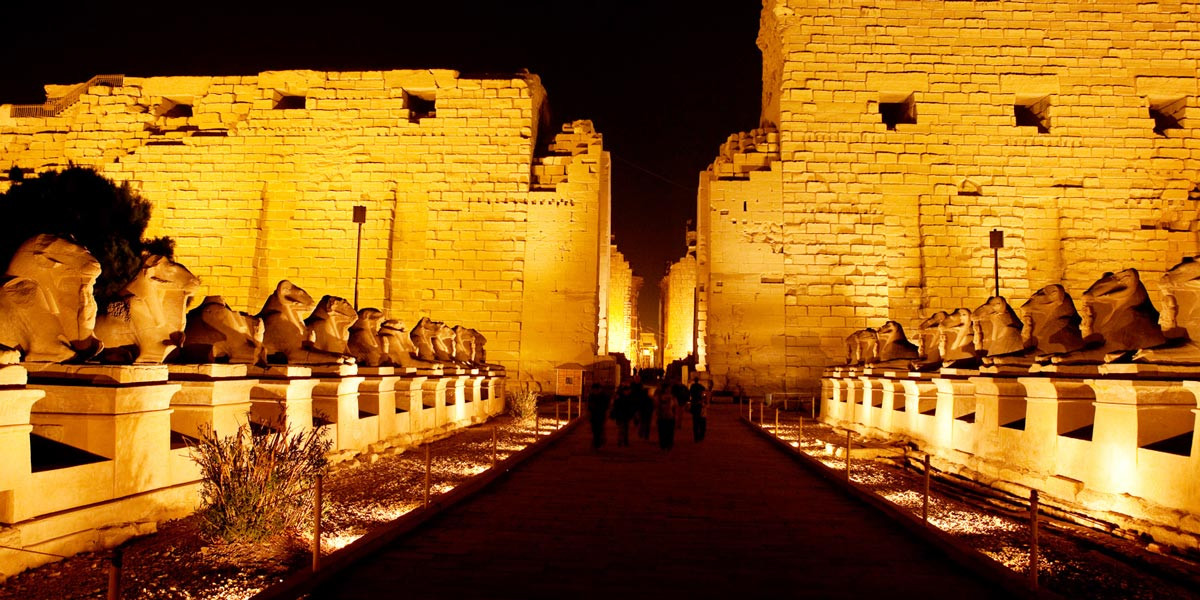
Located on the west bank of the Nile about 37 miles north of Luxor lies one of the best-preserved and visually astonishing temple complexes in the ancient world. The Dendera Temple Luxor complex, dedicated primarily to Hathor—the ancient goddess of love, joy, music, healing, and motherhood—is a masterpiece of Greco-Roman pharaonic architecture.
Temple of Dendera: Exploring the Goddess Hathor Complex
Located on the west bank of the Nile about 37 miles north of Luxor lies one of the best-preserved and visually astonishing temple complexes in the ancient world. The Dendera Temple Luxor complex, dedicated primarily to Hathor—the ancient goddess of love, joy, music, healing, and motherhood—is a masterpiece of Greco-Roman pharaonic architecture.
Unlike many ancient temples where stone roofs have collapsed and wall paint has eroded over thousands of years, Dendera remains almost completely intact. Following recent conservation work, centuries of dark soot and candle grease were carefully cleaned from the ceilings, revealing breathtaking, original astronomical roof paintings in brilliant lapis lazuli blues and vibrant golds.
Here is a detailed visitor guide to exploring the Dendera Temple Luxor complex.
Who Was Goddess Hathor?
To appreciate the rich symbolism inside the temple, one must understand Hathor’s role in ancient religion:
-
Goddess of Joy and Love: Hathor was celebrated as the patron deity of joy, music, dance, feminine fertility, and maternal protection.
-
Depiction in Art: She is typically depicted as a beautiful woman with cow ears, or bearing cow horns enclosing a glowing golden sun disk above her head.
-
The Hathoric Column: Her face decorates the capitals of giant stone columns throughout the temple, featuring her serene face facing four directions topped by cow ears.
Architectural Highlights to Explore Inside Dendera
The main Temple of Hathor covers over 40,000 square meters and contains several unique architectural features found at few other sites in Egypt:
1. The Great Hypostyle Hall and Astronomical Ceiling
Stepping through the massive outer facade into the Great Hypostyle Hall is a jaw-dropping moment. Twenty-four colossal Hathoric columns support an intact stone roof rising nearly fifty feet above.
-
The Ceiling Reliefs: The ceiling is divided into seven detailed bands depicting astronomical scenes, the sky goddess Nut giving birth to the sun, the journey of the sun barge through the hours of the night, and representations of the constellations and decans.
-
Vibrant Original Paint: Cleaning efforts have restored the vivid cobalt blues, emerald greens, and ochre yellows painted over 2,000 years ago.
2. The Famous Dendera Zodiac
Ascending the stone staircase to the roof chapels brings you to the site of the famous Dendera Zodiac.
-
Ancient Astrology: This ancient bas-relief ceiling carving represents one of the earliest known complete charts of the astrological zodiac, blending ancient Egyptian astronomical symbols with Greco-Roman astrological signs (including Taurus, Leo, Scorpio, and Aquarius).
-
The Original in Paris: The original stone ceiling carving was removed during the early 19th century and is now displayed in the Louvre Museum in Paris. The ceiling in Dendera holds a precise, beautifully detailed cast replica.
3. The Subterranean Crypts
Dendera is one of the few temples where visitors can descend narrow stone staircases into narrow subterranean wall crypts hidden beneath the temple floor.
-
Mysterious Reliefs: The narrow stone walls of the crypts feature detailed reliefs showing ritual cult statues and mysterious relief carvings known as the "Dendera Lightbulbs"—which fringe theorists speculate resemble electrical tubes, but Egyptologists identify as symbolic representations of the lotus flower birthing a snake (representing the god Harsomtous).
4. The Rear Wall: Cleopatra VII and Caesarion
Walking around to the exterior back wall of the main temple reveals a massive, towering relief carving of historic significance.
-
Cleopatra’s Image: It features one of the few surviving monumental depictions of the famous Queen Cleopatra VII alongside her son, Caesarion (Ptolemy XV), making offerings to the gods.
Practical Day-Trip Guidelines
-
Distance from Luxor: Dendera is located about a 60-to-90-minute drive north of Luxor.
-
Combine with Abydos: A popular day-trip strategy is pairing a visit to Dendera Temple Luxor with the nearby Temple of Seti I at Abydos, celebrated for its exquisite high-relief wall carvings.
-
Allow Enough Time: Allocate at least two to three hours at Dendera to explore the main hall, crypts, roof chapels, and surrounding birth houses (Mammisi).
Visiting the Dendera Temple Luxor complex offers an incredible journey into the artistic height, color, and mystery of late pharaonic civilization.