

 Ahmed Ragaie
Tucked along the west bank of the Nile River and on the quiet green islands south of Aswan lies a vibrant, distinct cultural world. The Nubian Village Aswan offers international travelers a colorful contrast to the ancient stone pharaonic temples found throughout Upper Egypt.
Nubian Village Aswan: Culture, Colors, and History
Tucked along the west bank of the Nile River and on the quiet green islands south of Aswan lies a vibrant, distinct cultural world. The Nubian Village Aswan offers international travelers a colorful contrast to the ancient stone pharaonic temples found throughout Upper Egypt.
The Nubian people are one of the world's oldest continuous civilizations, possessing their own distinct language, rich musical heritage, unique architecture, and warm hospitality. A day trip by boat to visit their colorful riverside settlements is a highlight of traveling through southern Egypt.
Here is a complete travel guide to exploring Nubian culture, colorful village life, and practical visitor tips.
Who Are the Nubian People?
Nubia is an ancient region that historically stretched along the Nile Valley from southern Egypt into northern Sudan.
-
Ancient Heritage: In antiquity, the Kingdom of Nubia (also known as Kush) was a powerful rival and trading partner of pharaonic Egypt. Nubian pharaohs even conquered and ruled all of Egypt during the 25th Dynasty (the Black Pharaohs).
-
Resettlement History: When the construction of the Aswan High Dam in the 1960s flooded historic Nubian homelands beneath Lake Nasser, thousands of Nubian families were resettled along the riverbanks near Aswan, preserving their rich cultural heritage in colorful new villages like Gharb Soheil.
-
Distinct Language: The local population speaks Nubian (an Nilo-Saharan language group) in daily life, alongside Arabic and English when hosting visitors.
What Makes the Nubian Village So Unique?
Stepping off the motorboat onto the sandy streets of the village instantly reveals a bright visual atmosphere:
1. Brightly Painted Dome Architecture
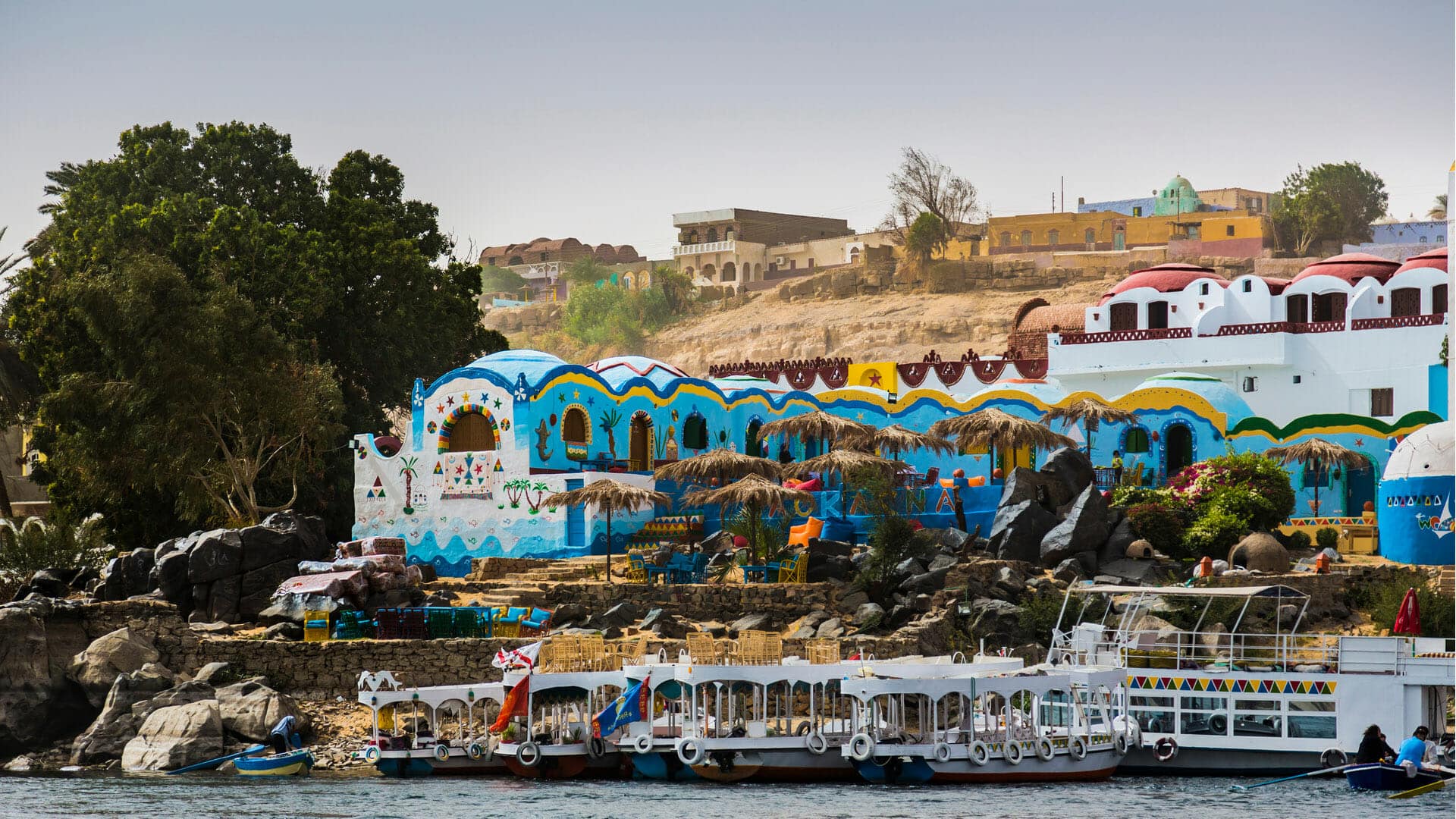
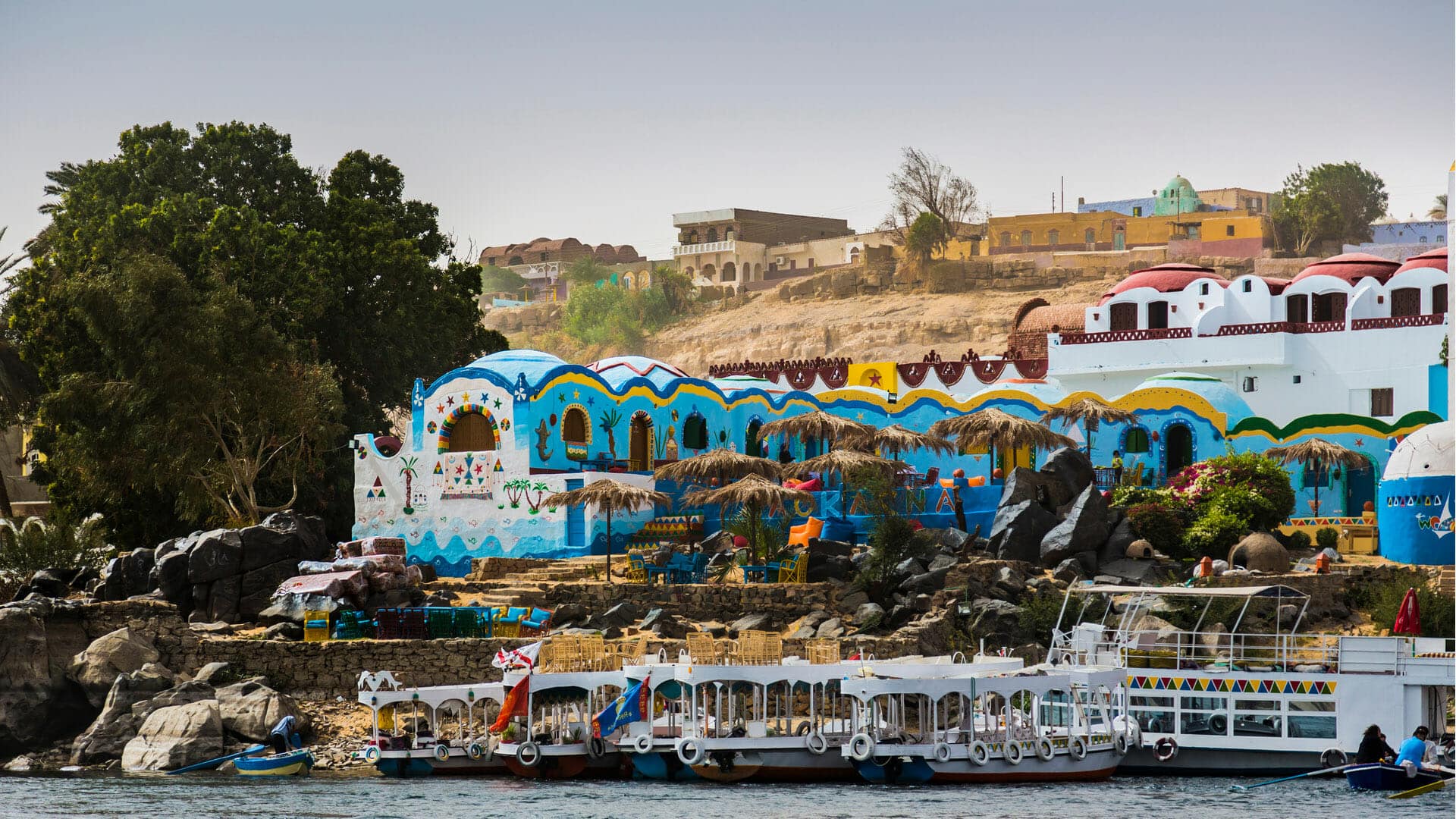
Nubian homes are famous for their unique architectural design. Built with thick mudbrick walls topped with vaulted, domed roofs, these homes stay naturally cool in intense desert heat. The exterior walls are painted in bright blues, yellows, oranges, and pinks, decorated with cheerful geometric patterns, palm trees, camels, and traditional symbols of good fortune.
2. Traditional Wall Murals and Symbols
Above house doorways, you will often notice dried crocodiles, evil eye charms, or fish symbols mounted into the plaster. In Nubian tradition, these symbols protect the home and its residents from bad luck while welcoming guests with open arms.
3. Warm Hospitality and Culture
Visiting a local home allows you to experience authentic local hospitality. Hosts welcome travelers with traditional hibiscus tea (Karkadeh), fresh flatbread with local honey, henna body painting, and traditional hand-woven crafts.
How to Get to the Nubian Village
The journey to the village is just as enjoyable as arrival:
-
By Motorboat or Felucca: The most popular and scenic way to reach the Nubian Village (specifically Gharb Soheil) is by taking a 45-minute wooden motorboat trip from Aswan. The route takes you past the lush greenery of Elephantine Island, the botanical gardens of Kitchener’s Island, and smooth granite boulders rising from the water.
-
By Camel or Road: Travelers can also access the village by road or arrange a camel ride along the sandy desert banks of the Nile leading into the village.
Practical Tips for Visitors
-
Support Local Artisans: The village streets are lined with outdoor stalls selling hand-carved wooden items, natural spices, woven baskets, silver jewelry, and traditional colorful clothing. Buying directly from local shopkeepers supports the community's economy.
-
Respect Resident Privacy: While the village is welcoming to tourists, remember that these are real family neighborhoods. Always ask politely before taking photos of local children or stepping inside private courtyards.
Visiting the Nubian Village Aswan offers a warm, colorful, and human connection to one of North Africa’s most ancient and resilient cultures.