

 Ahmed Ragaie
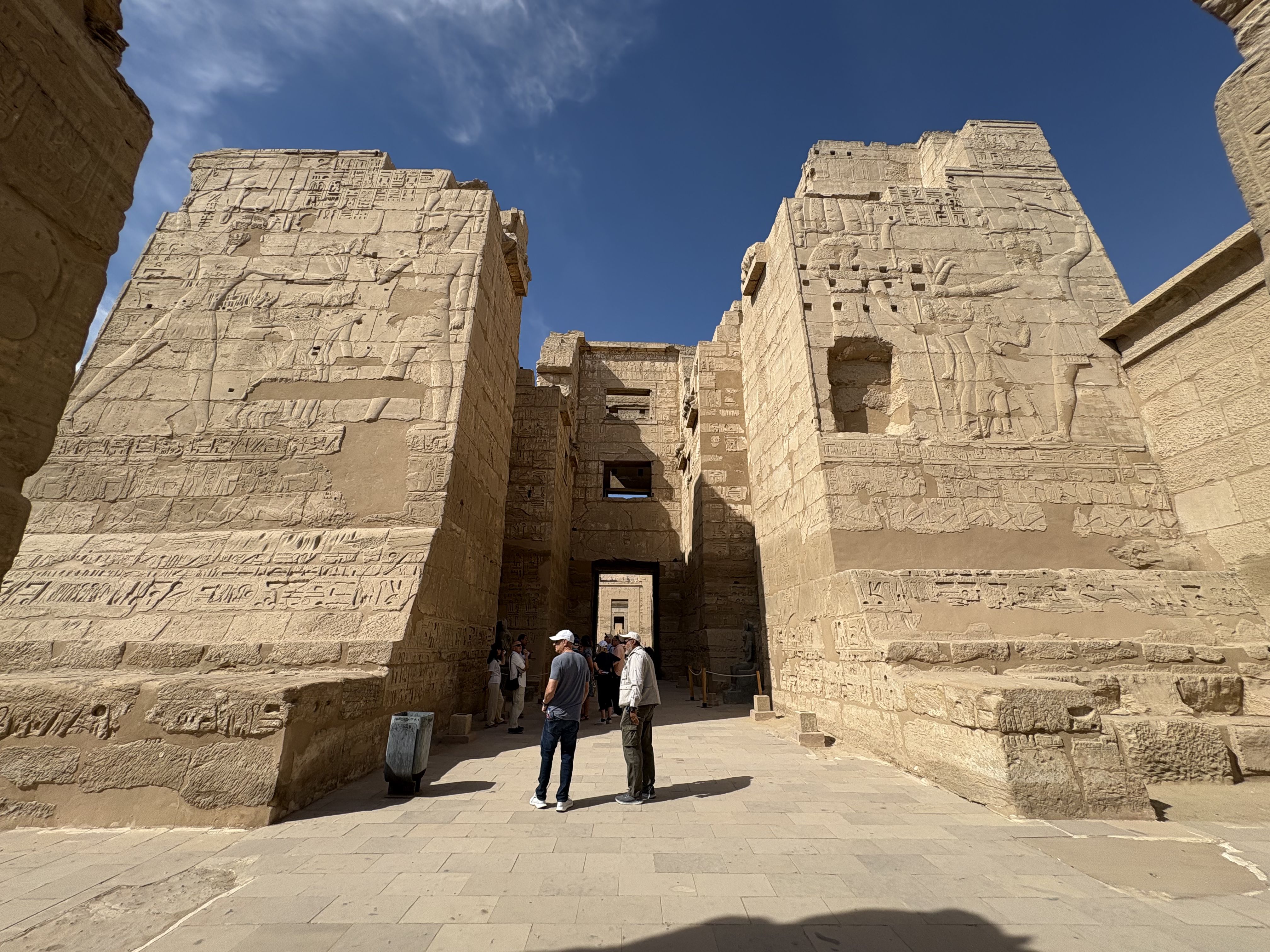
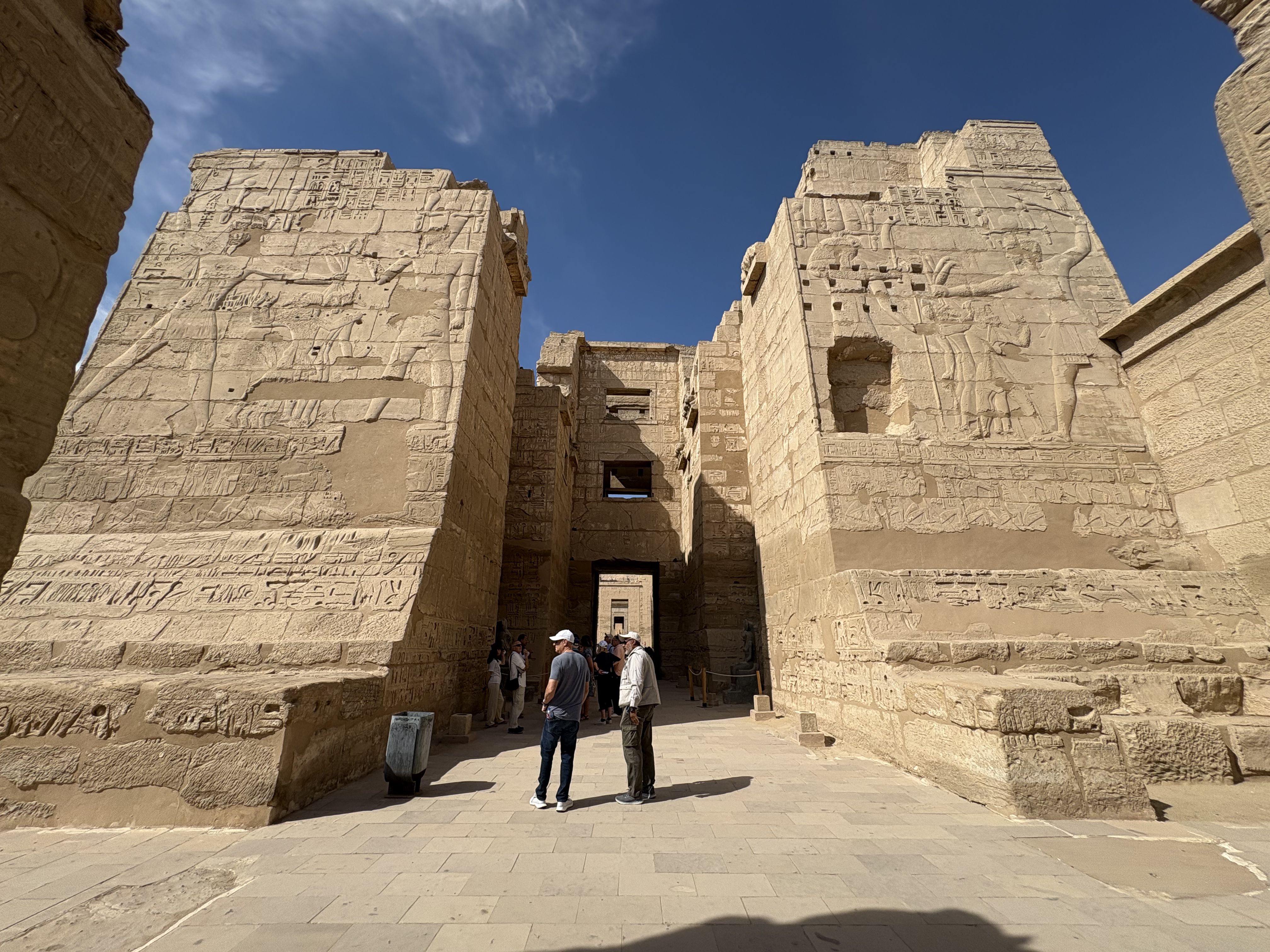
Located on the southern edge of the West Bank of Luxor lies one of the most underrated, massive, and dramatically carved monuments in Upper Egypt: Medinet Habu. Serving as the mortuary temple of Pharaoh Ramses III (the last great warrior king of the New Kingdom), this vast complex is celebrated for its towering fortified entrance gates, deep wall reliefs, and exceptionally preserved ceiling paint.
Medinet Habu: The Mortuary Temple of Ramses III
Located on the southern edge of the West Bank of Luxor lies one of the most underrated, massive, and dramatically carved monuments in Upper Egypt: Medinet Habu. Serving as the mortuary temple of Pharaoh Ramses III (the last great warrior king of the New Kingdom), this vast complex is celebrated for its towering fortified entrance gates, deep wall reliefs, and exceptionally preserved ceiling paint.
While tour bus crowds flock in massive numbers to nearby sites like the Valley of the Kings and Deir el-Bahari, Medinet Habu remains remarkably peaceful. Exploring its quiet stone courtyards allows you to appreciate 20th Dynasty architecture without feeling rushed.
Here is a complete guide to visiting the Mortuary Temple of Ramses III at Medinet Habu.
A Fortified Palace-Temple Complex
Medinet Habu was built not merely as a place of royal worship, but as a heavily fortified royal town capable of withstanding enemy attacks during turbulent times.
-
The Syrian Migdol Gate: The entrance pylon is unique in Egyptian architecture, modeled directly after a fortified Syrian military fortress (Migdol). High stone towers, battlements, and defensive stone balconies guard the main entrance.
-
A City of Refuge: The entire complex was originally enclosed within a massive mudbrick perimeter wall over 60 feet high. During later civil unrest and foreign invasions, local residents from across the West Bank moved inside the safety of Medinet Habu's walls for protection.
Key Reliefs and Architectural Highlights
The wall relief carvings at Medinet Habu are famous in global archaeology for their extraordinary depth and detail. Ramses III intentionally ordered stone carvers to cut the hieroglyphics several inches deep into the stone so that future pharaohs could not easily erase his name or achievements.
1. The Sea Peoples Naval Battle Reliefs
The exterior northern wall of the temple contains one of the most famous historical records in ancient military history: the epic battle against the "Sea Peoples."
Detailed stone carvings depict the world's first recorded naval battle, showing Egyptian warships trapping, impaling, and defeating foreign sea raiders in the Nile Delta. The reliefs show intricate details of foreign armor, feathered headdresses, and ship designs.
2. The First Courtyard and Royal Palace
Passing through the fortified entrance brings you into the First Courtyard. On the southern side lies the "Window of Appearances," where Ramses III appeared from his adjacent mudbrick royal palace to address court officials, award gold collar medals to victorious generals, and review enemy captives.
3. The Second Courtyard and Vivid Ceiling Paint
The Second Courtyard features colossal statues of Ramses III depicted as Osiris standing against heavy stone columns. Look up at the undersides of the stone architraves and covered ceilings—the original ceiling paint retains brilliant cobalt blues, geometric red stars, and golden sun disks that look freshly painted.
4. The Calendar of Festivals
The outer southern wall houses the longest carved calendar inscription in Egypt, listing every religious festival, sacrifice, and agricultural offering required throughout the calendar year to sustain the pharaoh's spirit in the afterlife.
Why Medinet Habu Should Be on Your Itinerary
-
Incredible Preservation: The sheer depth of the wall carvings and vivid interior ceiling paint rivals almost any other site in Luxor.
-
Peaceful Atmosphere: Because fewer large tour buses stop here, you can explore the courtyards, photo angles, and inner sanctuaries in relative peace and quiet.
-
Close Proximity: Located just minutes from the Colossi of Memnon and the Ramesseum, Medinet Habu fits seamlessly into any West Bank morning itinerary.