

 Ahmed Ragaie
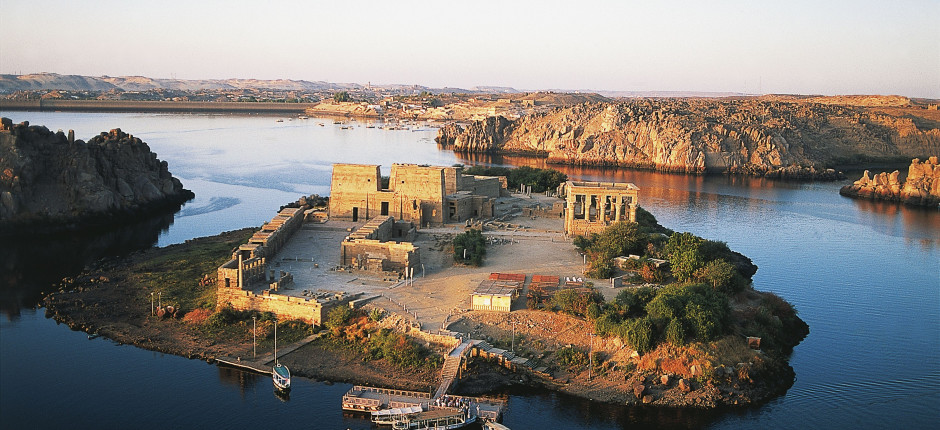
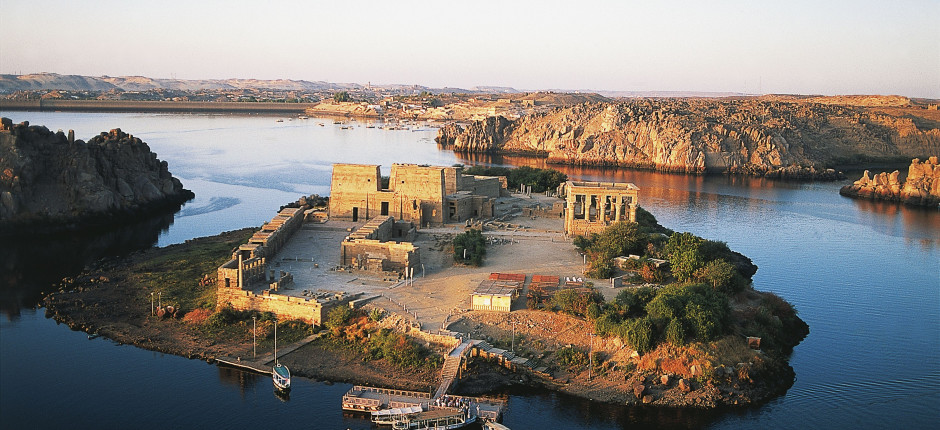
Rising gracefully out of the calm, blue waters of the Nile River south of Aswan, the island complex of Philae is one of the most romantic and visually enchanting monuments in North Africa. Dedicated primarily to Isis, the ancient goddess of magic, motherhood, and healing, this magnificent sanctuary was revered for centuries as a sacred place of pilgrimage.
Philae Temple Aswan: The Temple of Isis Guide
Rising gracefully out of the calm, blue waters of the Nile River south of Aswan, the island complex of Philae is one of the most romantic and visually enchanting monuments in North Africa. Dedicated primarily to Isis, the ancient goddess of magic, motherhood, and healing, this magnificent sanctuary was revered for centuries as a sacred place of pilgrimage.
Visiting Philae Temple Aswan is an experience that combines rich mythology with a memorable water approach. Because the temple sits on Agilkia Island, visitors must board traditional wooden motorboats to reach the monumental stone pylons.
Here is a complete, detailed travel guide exploring the history, mythology, architectural marvels, and modern UNESCO rescue mission behind Philae Temple Aswan.
The Mythology of Isis and Osiris
To understand the deep spiritual reverence surrounding Philae Temple Aswan, one must look at the central myth of ancient Egyptian religion: the story of Osiris, Isis, and Horus.
According to ancient legend, Osiris ruled Egypt peacefully alongside his sister-wife, Isis. Driven by jealousy, Osiris's dark brother, Seth, murdered Osiris, dismembered his body into fourteen pieces, and scattered them across the Nile Valley. Devastated, Isis searched the riverbanks, gathered every piece of her husband, and used her magic to temporarily restore Osiris to life.
During this miraculous reunion, Isis conceived their son, Horus, the falcon-headed god of royal protection. Ancient tradition held that one of Osiris’s sacred burial sites lay on the island of Bigeh, located directly adjacent to Philae. Because of this proximity, Philae became the ultimate sanctuary for worshipping Isis, who was celebrated as the ultimate protector, loving mother, and restorer of life.
The Last Holdout of Ancient Egyptian Religion
Constructed primarily during the Ptolemaic and Roman periods (between 380 BC and 100 AD), Philae Temple Aswan represents the final flourishing chapter of classical pharaonic civilization.
As Christianity spread rapidly across the Roman Empire during the 4th and 5th centuries AD, ancient temples were systematically closed or converted into Christian churches. However, due to its remote southern location and the deep devotion of the local Nubian population, Philae remained open as the very last active pagan temple in the ancient world.
It was not until the reign of Byzantine Emperor Justinian in 537 AD that the temple was officially closed, its priests expelled, and its inner halls converted into a Coptic church. Because of this unique timeline, Philae houses the last known carved hieroglyphic inscription in history, dated precisely to August 24, 394 AD.
The Monumental UNESCO Rescue Mission
The modern history of Philae Temple Aswan is just as dramatic as its ancient past. Following the construction of the initial Aswan Low Dam in 1902, the original island of Philae became partially submerged under river waters for most of the year. Visitors navigated through the flooded stone colonnades in rowboats, with water washing over delicate reliefs.
The situation became critical in the 1960s with the construction of the massive Aswan High Dam, which threatened to submerge the temples permanently beneath Lake Nasser.
Between 1972 and 1980, UNESCO launched one of the most ambitious engineering salvage operations in human history:
-
Coferdam Construction: Engineers built a massive double-walled steel coffer dam around the submerged flooded island and pumped out millions of gallons of water.
-
Dismantling Stone Blocks: Every temple building was surveyed, photographed, and carefully dismantled into over 40,000 individual stone blocks weighing up to 25 tons each.
-
Island Landscaping: A nearby higher island, Agilkia Island, was blasted with explosives and reshaped with heavy machinery to match the exact topography of the original Philae Island.
-
Reassembly: Over eight years, workers reassembled the stone blocks on Agilkia Island with millimeter precision, positioning the structures in the exact orientation relative to the sun as they originally stood.
Standing on the dry stone courtyards today, it is impossible to detect that the entire complex was relocated block by block from a flooded riverbed.
Key Architectural Highlights to Explore
Stepping off the boat onto Agilkia Island reveals a beautifully preserved complex filled with soaring columns, open courtyards, and detailed stone relief carvings.
1. The First Pylon and Outer Courtyard
The main entrance gateway consists of two massive stone towers standing over 60 feet high, decorated with giant relief carvings of King Ptolemy XII striking enemy captives before Isis, Horus, and Hathor. Passing through the pylon leads into a wide outer courtyard bordered by long, shaded colonnades featuring unique floral capitals on every column.
2. The Inner Sanctuary (Naos)
The innermost chamber of the main temple once housed the sacred golden statue of Isis. Here, priests performed daily rituals, burning incense, dressing the statue in fine linen, and presenting food offerings. You can still see the polished granite altar pedestal where the sacred wooden barque (boat) carrying the goddess's image rested during religious festivals.
3. Trajan’s Kiosk
Located on the eastern shore of the island overlooking the river, Trajan’s Kiosk is widely considered the visual icon of Philae. This elegant, roofless pavilion features fourteen soaring columns topped with complex floral capitals. Built during the reign of the Roman Emperor Trajan, it served as a ceremonial landing pavilion where the sacred boat of Isis was greeted as it arrived by water.
4. The Birth House (Mammisi)
Located in the main courtyard, the Birth House was dedicated to the divine birth of Horus. Ptolemaic rulers built these specialized structures to reinforce their political legitimacy, claiming divine descent directly from the gods.
Essential Visitor Tips for Philae Temple
To ensure a seamless excursion to Philae Temple Aswan, keep these operational details in mind:
-
The Boat Ride Experience: Accessing the island requires a ten-minute ride on a motorized wooden boat from the Marina Shellal dock. Enjoy the breeze and keep your camera ready as the island's stone columns appear over the water.
-
Visit During Late Afternoon: The golden hour before sunset provides magical light for photography across the river. The setting sun reflects off the warm sandstone walls and surrounding granite boulders, creating an unforgettable landscape.
-
Sound and Light Show: In the evening, the island hosts a multi-lingual Sound and Light Show. Soft spotlights illuminate the temples while theatrical narration recounts the mythology of Isis and Osiris across the dark water.
Exploring Philae Temple Aswan offers a harmonious mix of ancient mythology, dramatic architectural engineering, and scenic island beauty that remains a highlight of traveling through southern Egypt.