

 Ahmed Ragaie
Deep in the vast expanse of the Western Desert, just fifty miles from the Libyan border, lies one of the most secluded and culturally distinct destinations in North Africa. Surrounded by hundreds of miles of harsh sand dunes, Siwa Oasis emerges like a lush green mirage filled with over three hundred thousand date palms, olive groves, and thousands of natural freshwater springs.
Siwa Oasis Travel Guide: Egypt’s Desert Paradise
Deep in the vast expanse of the Western Desert, just fifty miles from the Libyan border, lies one of the most secluded and culturally distinct destinations in North Africa. Surrounded by hundreds of miles of harsh sand dunes, Siwa Oasis emerges like a lush green mirage filled with over three hundred thousand date palms, olive groves, and thousands of natural freshwater springs.
For travelers seeking an off-the-beaten-path adventure far removed from the bustling crowds of Cairo and Luxor, following a detailed Siwa Oasis travel guide unlocks an entirely different side of Egyptian heritage. From ancient ruins steeped in Greek history to floating in high-salinity salt lakes, Siwa offers an unforgettable desert escape.
Here is an in-depth, comprehensive guide to exploring this remote desert oasis, its rich Amazigh (Berber) culture, and its world-famous natural wonders.
The Unique Heritage of Siwan Culture
Unlike the majority of Egypt, where Arabic culture and pharaonic history dominate, Siwa is defined by its native Amazigh (Berber) roots. For thousands of years, the isolated geographic location of the oasis preserved a completely unique local culture, dialect, and social tradition.
-
Siwi Language: The local population speaks Siwi, a distinct Berber language that has no written pharaonic or Arabic origin, passed down orally through generations.
-
Traditional Crafts and Embroidery: Siwan women are renowned across North Africa for their elaborate silver jewelry, hand-woven carpets, and traditional wedding garments embroidered with vibrant silk threads symbolizing the sun, palm leaves, and desert life.
-
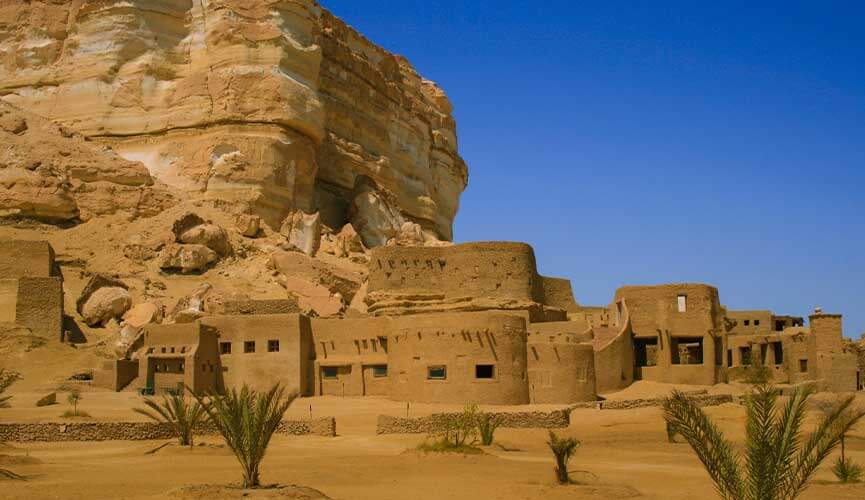
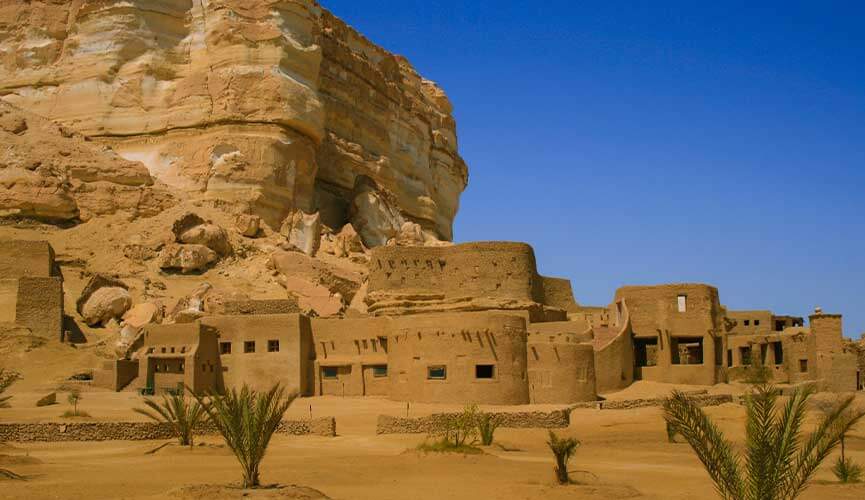
Eco-Friendly Architecture: Buildings in Siwa are traditionally constructed using Kershef—a unique local building material made from sun-dried mud mixed with salt rocks harvested from local lakes. This sustainable material acts as natural insulation, keeping indoor temperatures cool during blistering summer days and warm during chilly desert nights.
Legendary Historic Sites to Explore
Despite its extreme isolation, Siwa played a pivotal role in ancient classical history, attracting famous conquerors and pilgrims across the Mediterranean.
1. The Temple of the Oracle (Alexander the Great)
Perched atop a rugged rock formation overlooking the palm canopy, the Temple of the Oracle of Amun dates back to the 6th century BC. The site became world-famous in 331 BC when Alexander the Great made an arduous, perilous trek across the desert from the Mediterranean coast to consult the oracle.
According to ancient historians, the oracle confirmed Alexander's divine heritage, declaring him the true son of Amun (Zeus) and the rightful pharaoh of Egypt. Standing among the ancient stone ruins of the sanctuary offers sweeping panoramic views across the endless palm groves and desert horizon.
2. The Fortress of Shali
Dominating the center of Siwa town, the Fortress of Shali is a massive 13th-century labyrinthine stronghold built entirely from Kershef. Constructed to protect local villagers from raiding desert tribes, the multi-story fortress contained homes, storage vaults, and a mosque.
Although heavy rainstorms in 1926 eroded much of the organic mud-salt structure, walking through its winding, carved passageways feels like stepping through an ancient sandcastle village. Clambering to the highest peak of Shali at sunset offers a breathtaking view over the surrounding town.
3. The Mountain of the Dead (Gebel al-Mawta)
Located just north of the town center, this conical limestone hill is honeycomb-carved with hundreds of rock-cut tombs dating back to the 26th Dynasty, Ptolemaic, and Roman periods.
During World War II, local villagers used these ancient tombs as air-raid shelters during desert battles between Allied and Axis forces. Key tombs to explore feature remarkably preserved wall paintings blending traditional pharaonic iconography with classical Greek artistic styles.
Natural Springs and the Famous Salt Lakes
Siwa sits atop a massive underground aquifer, filling the desert depression with abundant water, natural hot springs, and hyper-saline lakes.
-
Cleopatra’s Bath (Ein Guba): This famous circular stone spring is fed by natural bubbling groundwater. Legend holds that Queen Cleopatra swam in these clear waters during a royal visit. Surrounded by shaded palm cafes, it is a popular spot to relax with a hot cup of local mint tea after exploring historic ruins.
-
The Buoyant Salt Lakes: Located on the outskirts of the oasis, Siwa’s commercial salt quarries have created brilliant turquoise water basins cut into blinding white salt crusts. Due to extreme salinity levels (higher than the Dead Sea), you float completely effortlessly on the surface of the water without sinking. The high mineral content is also praised for its natural therapeutic skin benefits.
-
Bir Wahed Hot and Cold Springs: Situated deep within the Great Sand Sea, Bir Wahed features a natural thermal hot spring sitting right next to a cool freshwater desert lake, creating a luxury spa experience right in the middle of towering sand dunes.
Desert Safaris in the Great Sand Sea
Surrounding Siwa is the Great Sand Sea, one of the largest continuous sand dune fields on Earth. Guided 4x4 desert safaris offer high-octane adventure through this vast wilderness:
-
Dune Bashing and Sandboarding: Skilled local drivers navigate massive, undulating sand dunes in four-wheel-drive vehicles. Adventurous travelers can strap onto sandboards and glide down steep, powdery golden slopes.
-
Prehistoric Marine Fossils: Scattered across sections of the desert floor are ancient petrified coral reefs and fossilized sea shells, reminding visitors that the Sahara was once a prehistoric ocean millions of years ago.
-
Bedouin Desert Camps: Ending a desert safari at a remote dune camp allows you to watch the sunset over the desert, enjoy a hot meal cooked under hot coals, and stargaze under completely unpolluted night skies.
How to Plan Your Trip to Siwa Oasis
Because Siwa is situated in a remote desert border region, proper logistics and travel planning are necessary:
-
Getting There: The drive from Cairo to Siwa takes approximately 8 to 9 hours by private vehicle or long-distance bus, typically passing through Marsa Matrouh along the Mediterranean coast.
-
Best Time to Visit: The ideal window for visiting Siwa is between October and April, when daily desert temperatures are pleasant and nights are cool. Summer months bring intense heat that makes outdoor exploration challenging.
-
Respect Local Customs: Siwa is a conservative community. Visitors should dress modestly when walking through local towns and village areas, covering shoulders and knees.
Following a well-planned Siwa Oasis travel guide guarantees an extraordinary journey into a peaceful, timeless desert sanctuary that reveals a completely unique facet of Egyptian history.