

 Ahmed Ragaie
The Unfinished Obelisk in Aswan: Ancient Stone History
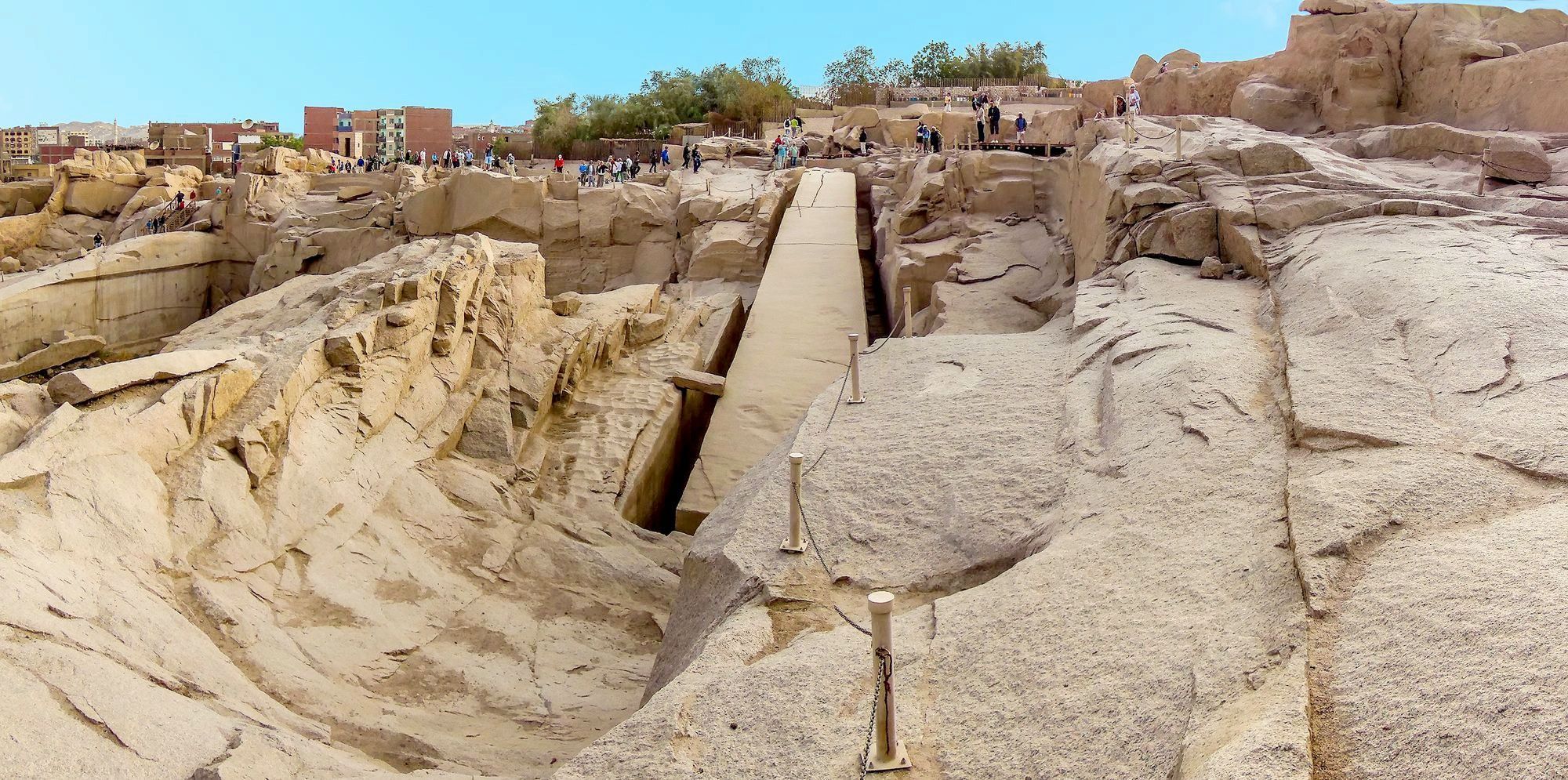
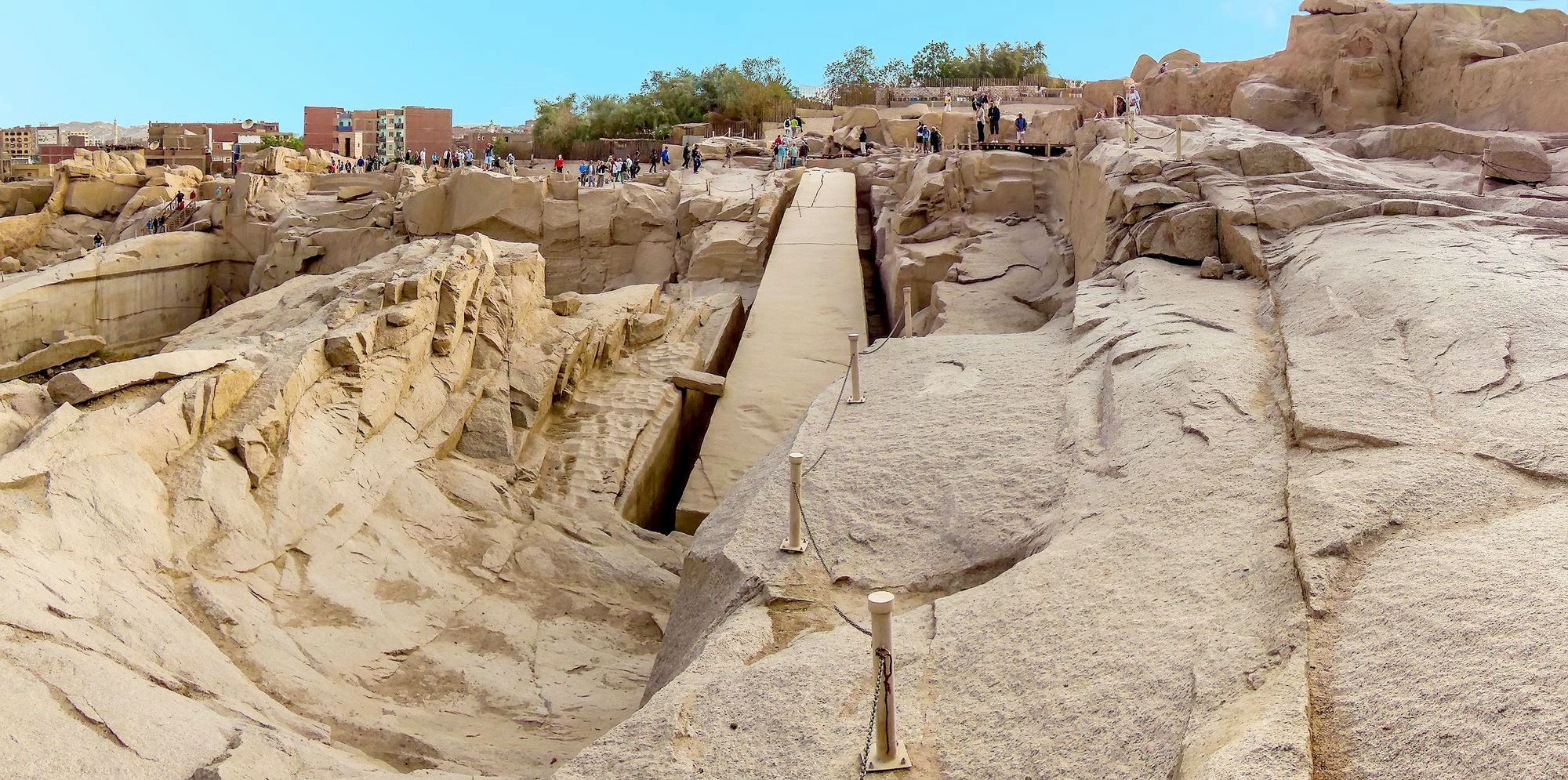
Located in an ancient pink granite quarry just south of central Aswan lies one of the most intriguing archaeological mysteries of the ancient world. The Unfinished Obelisk Aswan offers visitors an unprecedented look into the sheer engineering genius, labor organization, and stone-working techniques of ancient Egyptian quarrymen.
Had it been successfully carved and erected, this single colossal monument would have stood over 135 feet tall—taller than any ancient obelisk ever raised—and weighed an extraordinary 1,200 tons (equivalent to the weight of nearly three Boeing 747 airplanes).
Here is a detailed historical guide to exploring this open-air quarry museum and understanding how ancient engineers carved solid granite without modern tools.
The Mystery of Construction: How Was It Carved?
To appreciate the Unfinished Obelisk Aswan, one must understand the immense hardness of pink Aswan granite. Unlike softer limestone or sandstone used for temples, granite cannot be easily cut using soft bronze or copper chisels available during the New Kingdom era.
Instead, ancient workmen used a remarkably laborious method:
-
Dolerite Pounding Stones: Workers used heavy, spherical balls of dolerite—an extremely hard, dense volcanic stone found in the eastern desert—weighing between 10 and 15 pounds each.
-
Pounding the Trench: Laborers stood in tight channels cut along the sides of the obelisk, repeatedly dropping and slamming these heavy dolerite balls against the solid granite rock face to gradually pulverize the stone into fine dust, inch by inch.
-
Friction and Heat: Evidence suggests workers may have also used fire and water cycles to fracture the stone surface before pounding it down with dolerite balls.
Standing on the wooden walkways above the quarry today, you can still clearly see the rounded scoop marks left by human hands thousands of years ago lining the sides of the stone trench.
Why Was It Abandoned?
The obelisk was commissioned during the 18th Dynasty, most likely by the female Pharaoh Hatshepsut, to be transported to Karnak Temple in Luxor.
However, as workmen were completing the final stages of carving the three long sides out of the bedrock and preparing to undercut the base, disaster struck. A massive, deep structural crack fractured through the center of the granite block, rendering the monument structurally unsound.
Work on the giant obelisk ceased immediately. While this was a disappointing failure for ancient royal engineers, it became an invaluable gift for modern archaeologists. Because the obelisk was abandoned in place right in its bedrock matrix, it provides a preserved "snapshot" of ancient quarrying techniques that would otherwise be lost to history.
What to See at the Quarry Site
Visiting the open-air quarry site offers several key highlights:
-
The Main Trench Walkways: Elevated wooden walkways surround the entire length of the giant lying obelisk, allowing visitors to look directly into the narrow trenches where ancient workers stood.
-
Abandoned Trial Inscriptions: Scattered around the bedrock floor are smaller abandoned quarries, stone trenches, and trial carvings used by apprentice stonemasons.
-
Visitor Center Information: The site features an informative visitor center displaying ancient dolerite pounding stones recovered from the site, along with historical diagrams illustrating how obelisks were extracted, dragged on wooden rollers to the Nile, and loaded onto specialized barges during the annual river flood.
Essential Visitor Tips
-
Visit Early in the Morning: The open granite quarry acts like a giant heat reflector, making midday temperatures extremely hot. Visit early in the morning alongside a trip to Philae Temple or the Aswan High Dam.
-
Wear Closed-Toe Shoes: The site features stone steps, unpaved ramps, and uneven rock surfaces. Wear sturdy walking shoes or sneakers.
Exploring the Unfinished Obelisk Aswan provides a humbling look at the physical labor, determination, and technological ingenuity behind ancient Egypt's greatest stone monuments.